By Dr David Bell, Specialist Anaesthetist (Retired), Software Engineer, and Founder of Align AI Fitness, NSW, Australia
Most anaesthetists drive to work. Dr Adam Hill flies.
Before Dawn at Bankstown
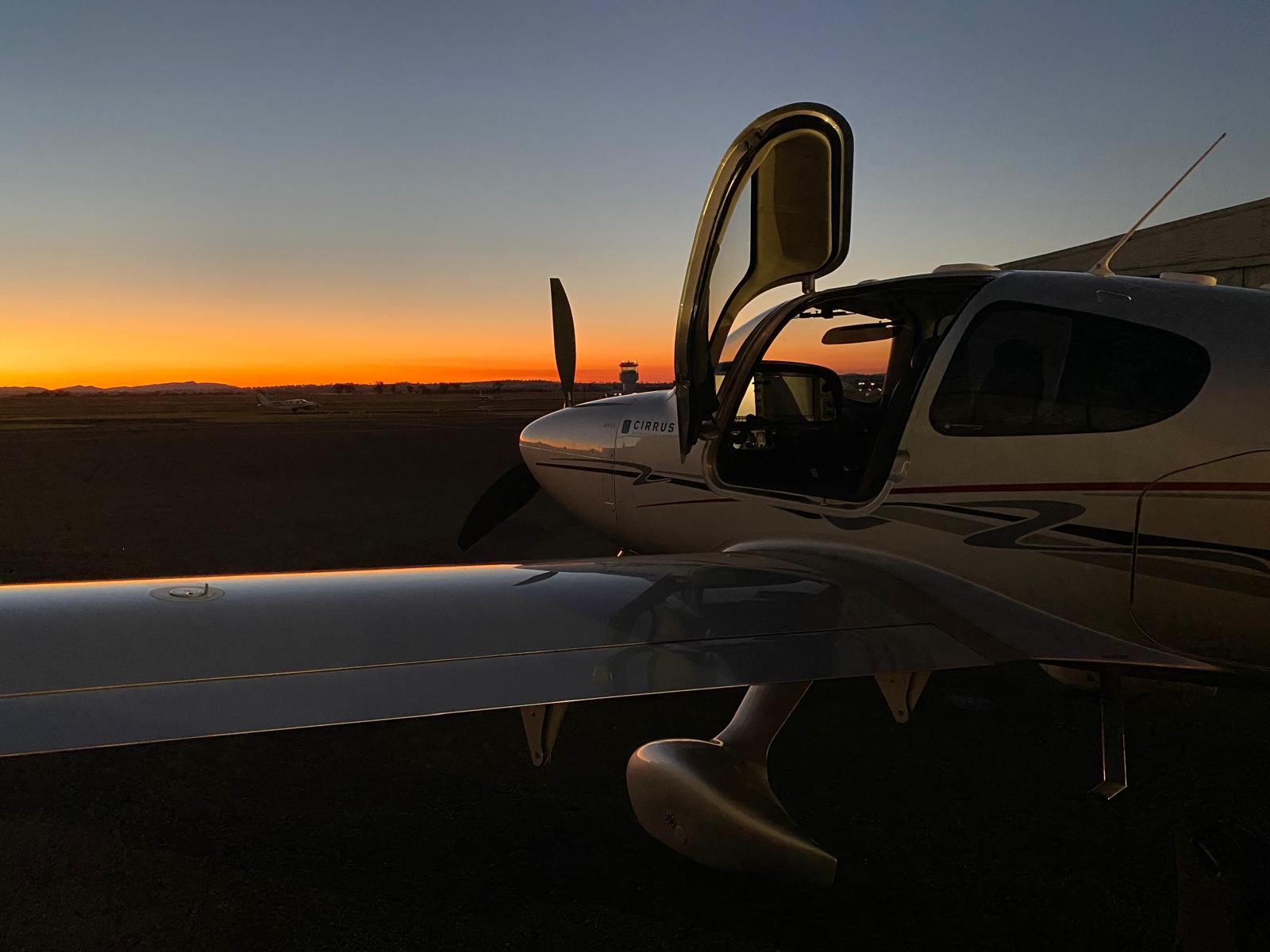
It's 5:15am on a Thursday at Bankstown Airport. The car park is empty except for a handful of vehicles clustered near the general aviation hangars. The terminal is dark. The only movement is a man in a blue shirt walking across the apron toward a white Cirrus SR22, coffee in one hand, flight bag in the other.
By the time he's pulled the chocks and started his pre-flight walkaround, checking fuel sumps, control surfaces, tyre pressures, two nurses have arrived. They load their bags into the back seats, climb in, pull on headsets. There's no fanfare. No check-in desk, no boarding pass, no security screening. Just a four-seat single-engine aircraft, an anaesthetist in the left seat, and a 400-kilometre flight to a regional town where a surgical list is waiting.
Hill runs through his checklist. Avionics on. Engine start. Radio call to ground control. The Cirrus taxis to the runway in the pre-dawn grey, and by the time the wheels leave the ground, the eastern horizon is starting to glow.
An hour and a half later, they'll touch down at a regional airfield. The nursing staff will set up the theatre while Hill meets the surgeon and reviews the patient list. By 8:30am, the first patient will be asleep. By the time the last patient is in recovery, it's after 6pm. The team packs up, walks back to the plane, and flies home to Sydney as the sun sets over the ranges.
This happens every fortnight. It has been happening for years.
The Only One
Hill is, as far as anyone in the specialty can tell, the only instrument-rated anaesthetic pilot in Sydney. He's been flying since 2007, when he was a registrar in Orange doing anaesthetics and ICU. What started as a passion became something more practical: a way to deliver specialist anaesthetic services to towns that struggle to attract them.
Over the years, he's flown to Griffith, Albury, Tamworth, and Armidale. The destinations change, but the pattern doesn't. Get up before dawn. Fly the team out. Run the list. Fly home. The patients on those lists are people who would otherwise drive three, four, five hours to Sydney for a procedure, or go on a waiting list that doesn't move, or simply not have the procedure at all.
It's not a charity operation, and Hill doesn't frame it that way. The lists pay, and the flying is tax-deductible. But the reality is that nobody else is doing it. The combination of a fellowship-qualified anaesthetist (FANZCA), an instrument rating, and the willingness to get up at 4am is not something you can recruit for on Seek.
Flying in the Weather
For non-pilots: most private pilots hold a visual flight rules (VFR) licence, which means they can only fly when they can see the ground and the horizon. An instrument rating (IFR) means Hill can fly in cloud, fog, and reduced visibility, navigating entirely by instruments. It's the same qualification commercial airline pilots hold. It takes hundreds of additional training hours and regular proficiency checks to maintain.
This matters because regional Australia's weather doesn't care about your surgical list. Armidale, the highest city in Australia at 3,500 feet above sea level, is notorious for morning fog that can sit in the valley until mid-morning. Some weeks the team flies up the night before and stays in a motel because the forecast says they won't be able to land until 10am. Some days the flight plan gets rewritten around a line of thunderstorms building over the New England Tablelands. Hill has come back to Sydney dodging cells, diverting around weather that appeared after departure.
He makes these calls the same way he makes clinical calls: assess the risk, have a plan B, and know when to call it off. There's an interesting parallel between the two skill sets, and Hill has spoken about it. Both aviation and anaesthesia demand calm under pressure, systematic decision-making with incomplete information, and the discipline to follow checklists without becoming a slave to them. (I wrote separately about the pressures the medical system places on doctors like Hill.) The critical difference, he's noted, is that aviation's safety culture is built around learning from incidents without assigning blame. Medicine is still working on that.
Mallacoota
If you want to understand what kind of person Adam Hill is, the Mallacoota story is probably the best place to start.
On New Year's Eve 2019, the Victorian coastal town of Mallacoota was cut off by the Black Summer bushfires. Roads in and out were blocked. Four thousand people sheltered on the beach as the sky turned red and the town prepared for the worst. The images were broadcast around the world.
In the days that followed, the local medical centre was overwhelmed. Dr April Armstrong, a GP who'd come to Mallacoota to locum over Christmas, found herself coordinating a makeshift medical response with volunteer doctors who happened to be holidaying in the area. They saw 200 patients in the first 48 hours. Three hundred more in the next three to four days.
But they needed reinforcements. And official channels weren't delivering. According to Robyn Bryant's account in the community book The Day Mallacoota Turned Red, the Health Commander (a paramedic) initially advised that doctors "weren't needed in Mallacoota." Private air transport had to be arranged because the state system simply wasn't providing it.
Hill was one of the pilots who stepped up. He flew his Cirrus into Mallacoota, ferrying locum doctors into the town when nobody else could get them there. He wrote about the experience himself in a piece published on the Cirrus Aircraft website in January 2020, describing how he'd seen health professionals volunteering their services on social media but had no way to reach the town.
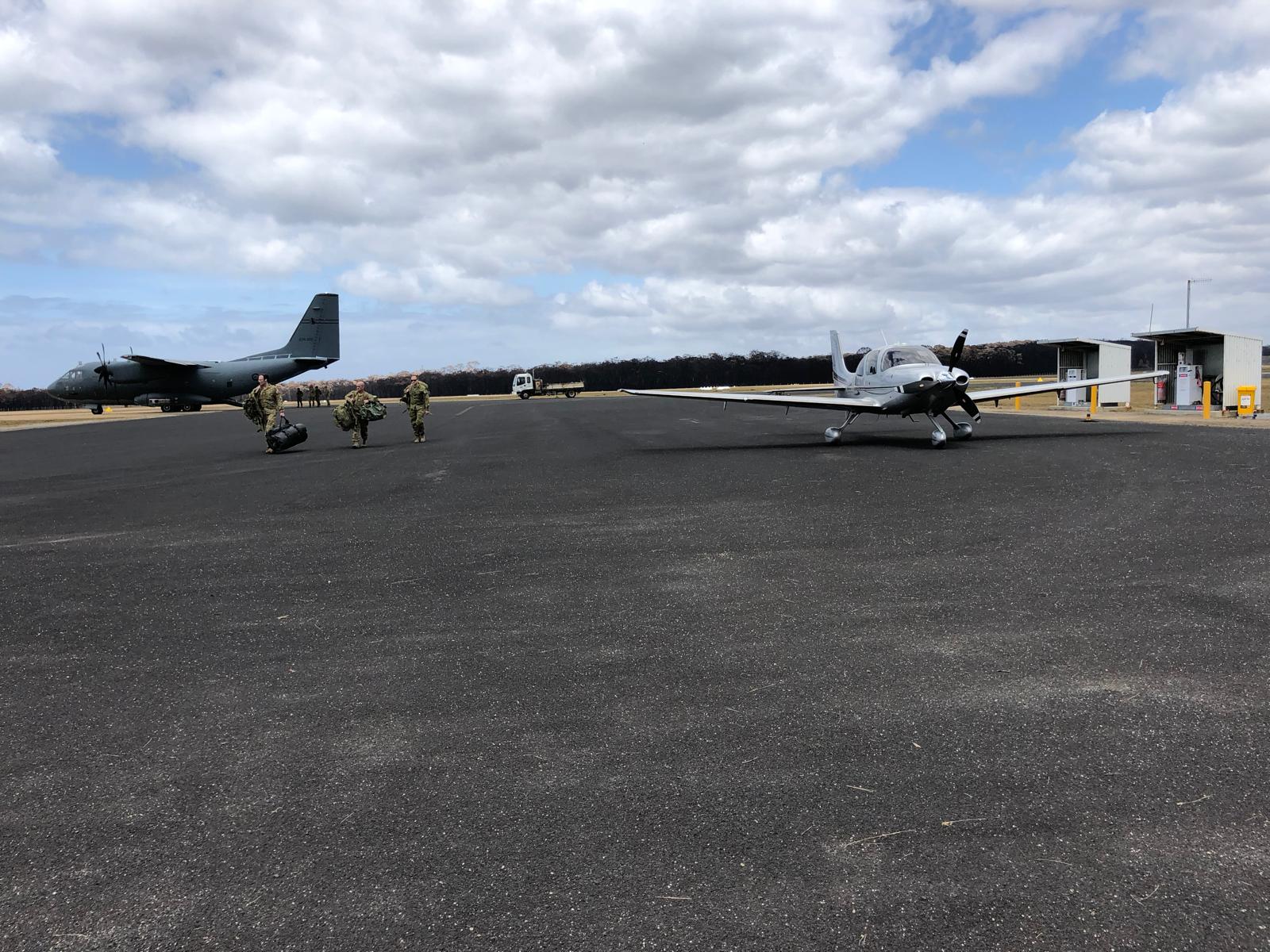
He also flew over the fires themselves. Photos taken from the cockpit show bushfire smoke plumes rising through cloud layers, and the orange glow of active fire fronts visible at dusk through the haze below the wing. These weren't sightseeing flights. They were the view on the way to and from a community that needed doctors.
The people of Mallacoota remembered. In The Day Mallacoota Turned Red, the book compiled by local GP Dr Mubashar Sherazi and written by the community, a photo caption on page 138 reads simply: "Dr Adam flew on his own plane to Mallacoota and brought locum doctors."
The Invisible Specialty
Ask someone what their anaesthetist did during surgery and they'll tell you: "They put me to sleep." Maybe they'll remember a needle in the back of the hand. That's it. The surgeon gets thanked by name. The anaesthetist, if they're remembered at all, is "the guy who gave me the injection."
What actually happens is considerably more involved. From the moment a patient is wheeled into theatre, the anaesthetist is running the physiology. They're managing the airway (which, in a patient who is paralysed and unconscious, means keeping them alive). They're ventilating the lungs mechanically, adjusting tidal volumes and oxygen concentrations breath by breath. They're monitoring cardiac output, arterial blood pressure, oxygen saturation, end-tidal CO2, core temperature, neuromuscular blockade, depth of anaesthesia, urine output, blood loss, and fluid balance, all simultaneously, all in real time, for as long as the case runs.
During a complex spinal reconstruction (the kind Hill does regularly) that might be eight or ten hours. The patient is prone, face down on a specially designed frame. The airway is inaccessible. Blood loss can be measured in litres. The anaesthetist is running multiple infusions, managing a cell salvage machine to recycle the patient's own blood, titrating agents to keep blood pressure low enough to reduce surgical bleeding but high enough to perfuse the spinal cord, and monitoring neurological function with evoked potentials to ensure the surgeon hasn't compromised the cord. One wrong decision and the patient wakes up paraplegic. Or doesn't wake up at all.
In obstetrics, the stakes are different but no less acute. When an emergency caesarean is called, the anaesthetist has minutes to get the mother safely anaesthetised, the baby delivered, and both patients stable. Hill is one of the highest-volume obstetric anaesthetists on Sydney's North Shore, requested by name by both obstetricians and patients. The obstetricians request him because they trust him in a crisis. The patients request him because word gets around, even for the invisible specialty.
None of this is visible to the patient. By design, the best anaesthetic is the one you don't remember. The patient goes to sleep, wakes up, and usually has no idea who was responsible for the fact that they woke up at all, that they woke up with their pain controlled, their blood pressure stable, and their airway intact. Anaesthetists are, in Hill's words, "the invisible doctor." They like it that way. But it means the public has almost no way of knowing what they do, let alone how good any individual anaesthetist is at doing it.
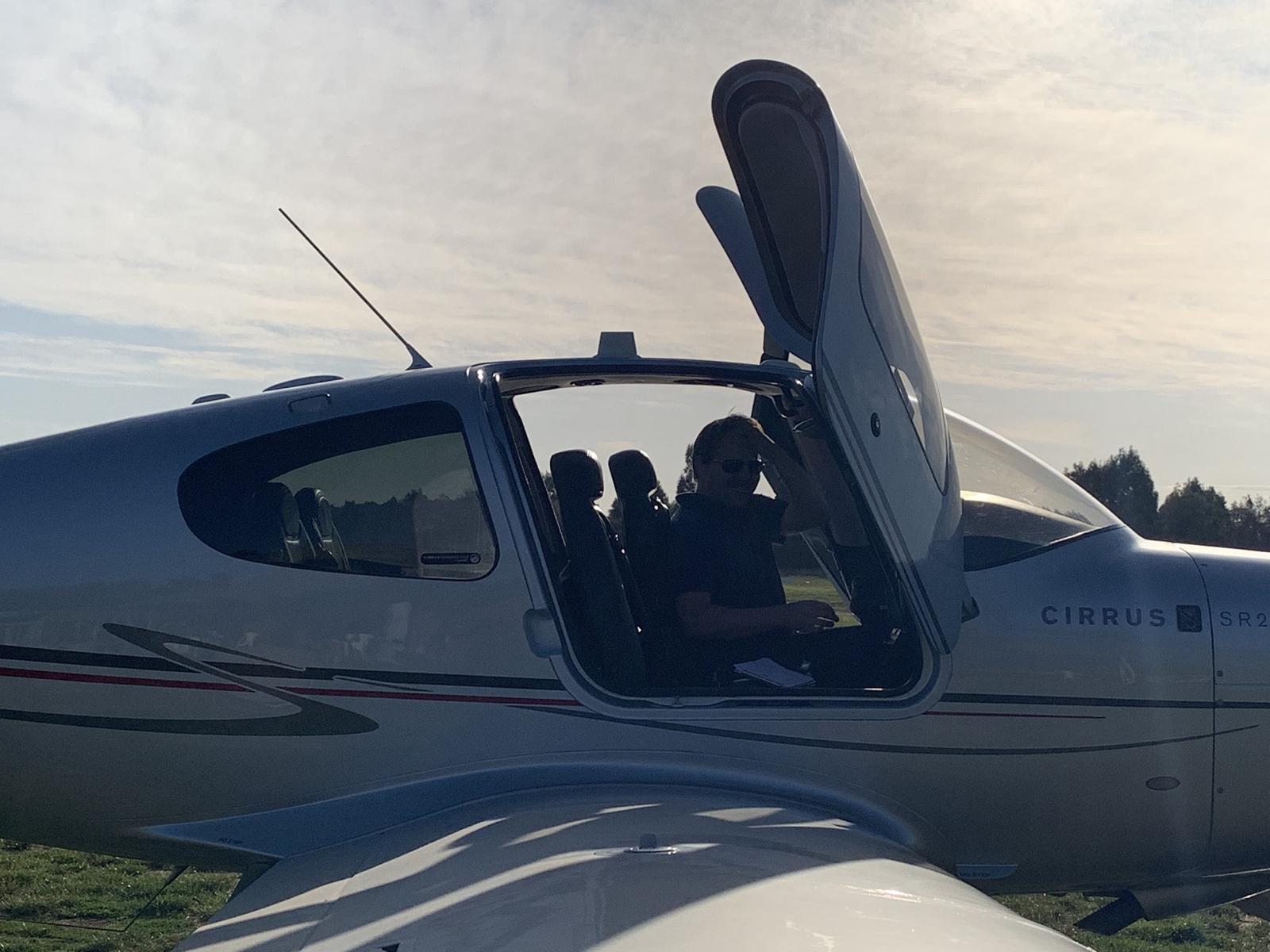
Hill has spent nearly two decades providing anaesthesia for some of the most complex cases in Sydney's private hospitals. He flies his own aircraft to deliver care to regional communities that can't attract specialists. He volunteered his plane, his time, and his skills during one of Australia's worst natural disasters. I know Adam. We trained together, and we worked together. I know what his colleagues think of him because I've been in the theatre when they've said it. Stories like his deserve to be told, and until now, nobody has told them.
The Bigger Question
Hill's story isn't unique in its broad strokes. There are specialists across Australia doing extraordinary things that nobody outside their operating theatre will ever hear about. What's unusual about Hill is that the rest of his career is so obviously worth talking about, and until now, nobody has.
He'll keep getting up before dawn. He'll keep flying nursing staff to regional towns where the surgical list depends on him showing up. He'll keep managing cases that most of his colleagues wouldn't take on solo. And slowly, the stories that deserve to be told will be.
This is one of them.
Related Reading
Update, 30 March 2026: Since this article was published, Dr Hill has begun publishing his own clinical writing at dradamhill.com.au, covering topics including obstetric anaesthesia, massive transfusion management, and the gap between aviation safety culture and medicine's blame-focused approach. His clinical practice continues across Sydney and regional NSW.